
Skip to content
brushing with braces2

Taking Care of Your Braces or Aligners

Braces Care Tips

Keep these things in mind if you want to get the most successful treatment results possible (and keep your smile healthy).


Ortho Care

Take especially good care of your teeth during orthodontic treatment.

By brushing and flossing regularly, you’ll keep your teeth and gums at their best and ensure that your orthodontic treatment will deliver the healthiest smile possible.

When your braces come off, you’ll see that your extra efforts have been rewarded with a healthy, great-looking smile that’ll last the rest of your life.

If you fail to spend a little extra time caring for your braces, you may end up with white spots on your teeth once the braces are removed. This is an unsightly condition that no one wants.

Doing Your Part

To get the healthy and beautiful smile that you want, you, your family dentist, and your orthodontist will have to work together as a team.

As the patient, you play the key part. It’s up to you to make sure that your treatment is successful.

Most importantly, you must keep your teeth clean and maintain good dental hygiene while you’re wearing braces.

Proper dental care will take a little extra time and effort, but the results are well worth it.

It will help you enjoy the best possible smile from your orthodontic treatment.

Plaque Is Your Enemy

Plaque is a sticky, colorless film that collects on your teeth. It’s made of bacteria, food, and saliva. If you let plaque and trapped food stay on and around your braces, they can cause swollen gums, bad breath, cavities, and permanent marks on your teeth.

As your orthodontists, we advise brushing your teeth regularly to remove this plaque. We teach all of our patients the correct way to floss while wearing braces to make sure you remove all plaque on regularly.

When to Clean

Brush thoroughly each time you have a meal or snack. If you can’t brush right away after a meal, be sure to at least rinse your mouth well with water until you can brush.

Carry a travel toothbrush so that you can brush when you aren’t home.

At least once every day, brush your teeth and braces thoroughly until they are spotlessly clean, and then floss. This takes a little extra time, so you may want to do it at night before going to bed.
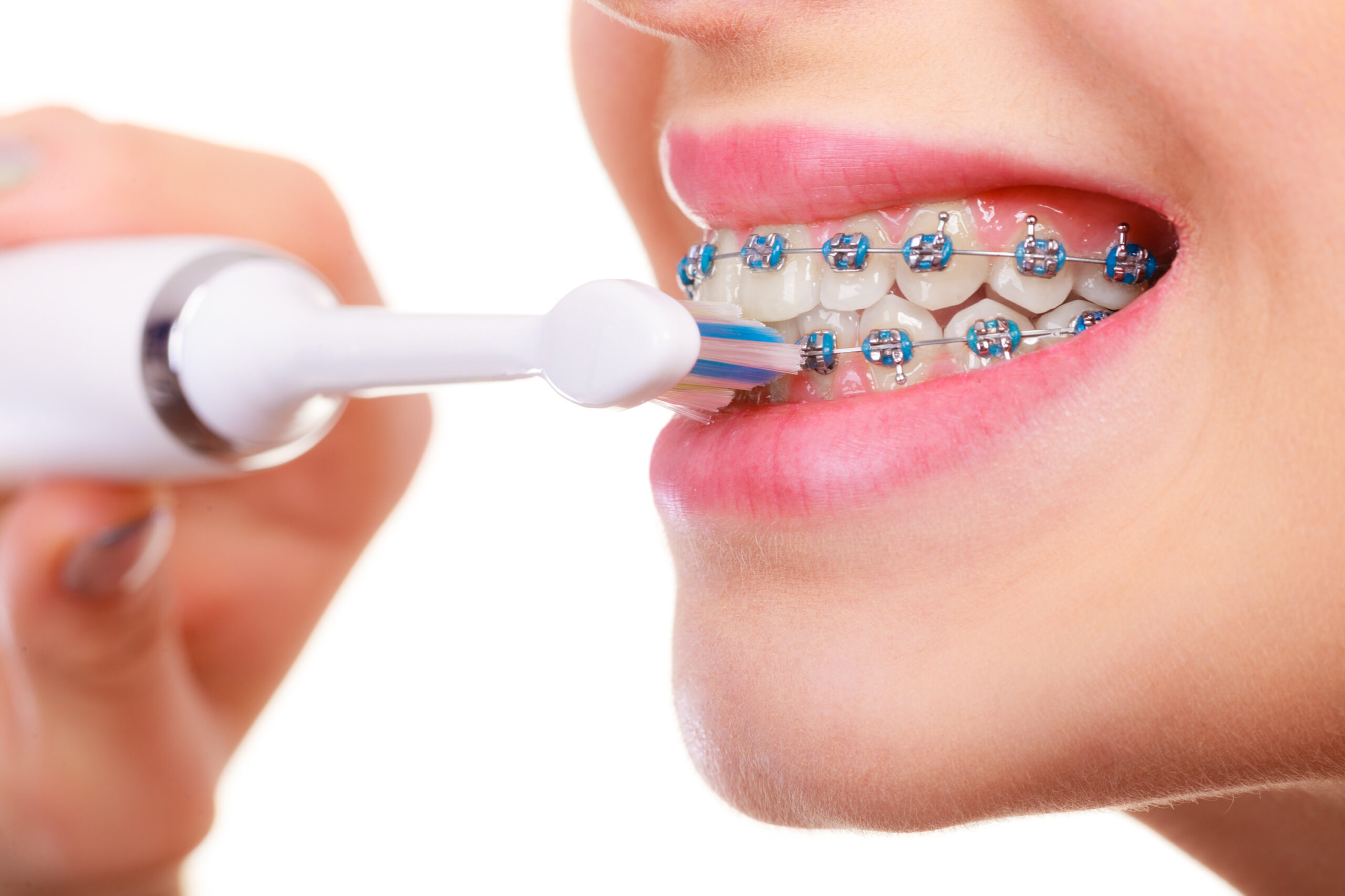

How to Brush with Braces

During your braces treatment, you will need to relearn the basics of brushing your teeth.

Relearning this everyday task will teach you to pay attention to the cracks and crevices not only between teeth but around brackets and wires.

Keep these tips in mind when brushing your teeth with braces:
  • Use a fluoride toothpaste and a soft, rounded-bristle toothbrush that’s in good condition. Because braces wear out a toothbrush quickly, replace your brush as soon as it shows signs of wear.
  • Brush around all the parts of your braces and every surface of your teeth — fronts, sides and backs. Be sure to brush your tongue and the roof of your mouth. A good way to tell if you’re brushing correctly is if your braces look clean and shiny, and you can see the edges of the brackets clearly.
  • Brush your gums gently and thoroughly.
  • Rinse thoroughly after brushing.
  • Inspect your teeth and braces carefully to make sure they are spotless. Look closely in a well-lighted mirror. This is a good time to check for loose or broken brackets. If you find a problem, contact [office name] to see if it needs to be checked out and if we need to schedule a time to make a repair.
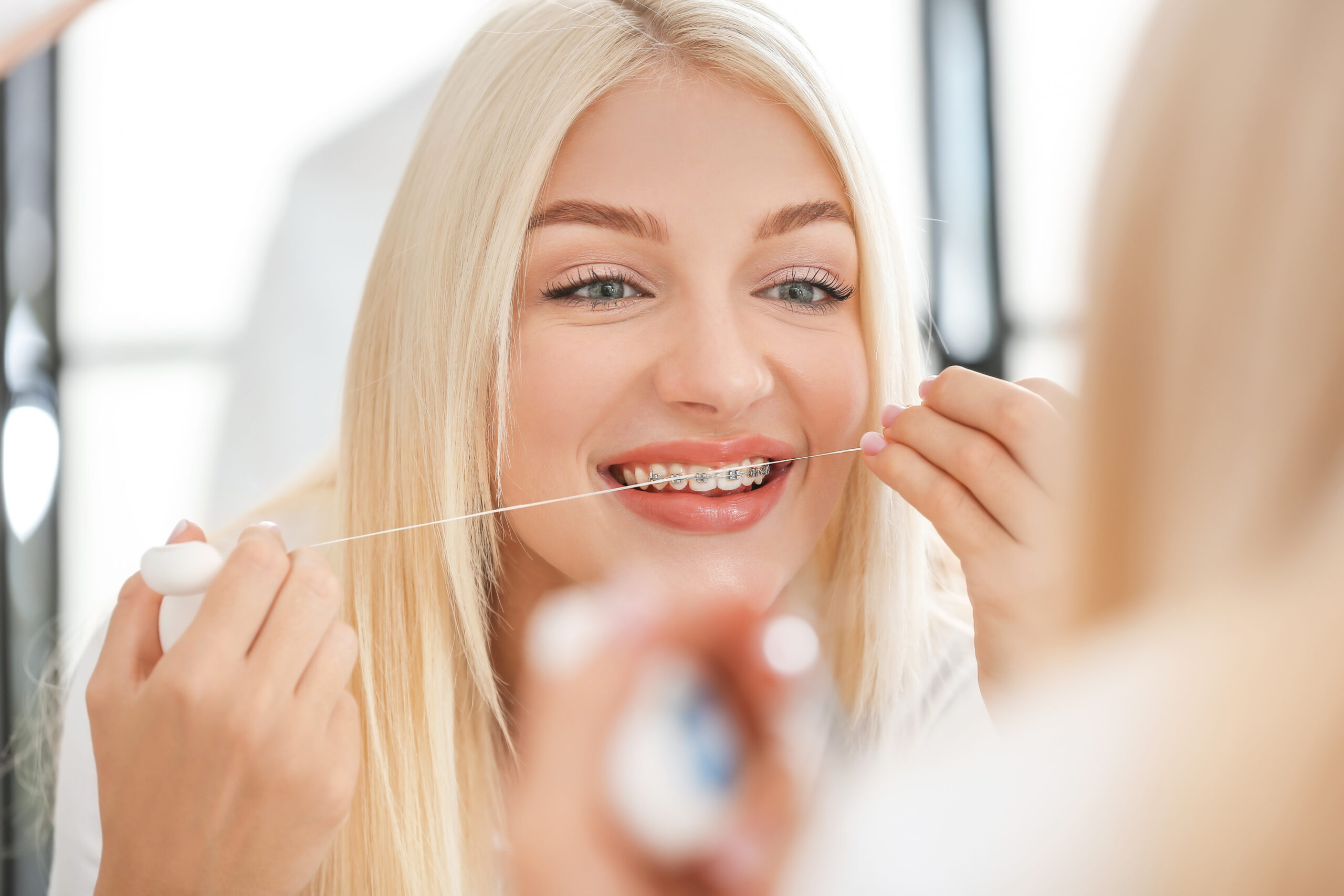
Young woman with dental braces and floss

How to Floss with Braces

Our helpful staff will help you learn proper flossing techniques when you choose us for your orthodontic care.

These tips for flossing with braces will make the process smoother for you, and you’ll be a pro in no time.

  • Floss every night before you go to bed. That way, you won’t feel rushed.
  • When flossing with braces on, it might be necessary to use what’s called a floss threader. This reusable tool allows you to get dental floss underneath your archwire easily.
  • Make sure you clean carefully along and under the gumlines.
  • Flossing with braces may seem like a difficult process, but it’s very important. And as with anything, a little practice will make it go a lot faster.

Other Hygiene Helpers

In addition to the regular dental hygiene tools we are familiar with like toothbrushes and floss, there are a few products we can recommend that make brushing teeth with braces a little easier to manage.

  • Interproximal Brush: This tool slips under your archwire to more completely remove plaque and food particles near your brackets.
  • Prescription Fluoride Toothpaste or Fluoride Rinse: Use once a day as part of your cleaning routine, if prescribed by your orthodontist. For the best results, use with your interproximal brush to deliver maximum fluoride protection to your teeth.
  • Power Toothbrush or Waterpik: These devices, such as the Oral-B Professional Series toothbrush, are designed to make brushing easier and more efficient.

Problems Caused by Poor Oral Hygiene

Good dental hygiene is critical during orthodontic treatment. Without it, plaque and food can accumulate around your braces.

The bacteria in plaque react with sugars and starches in food and form an acid that can eat away the enamel on your teeth, leading to white marks, cavities or gum disease.

  • If plaque accumulates around your braces, it can leave permanent stains on your teeth called decalcification. Lines and spots from decalcification will remain on your teeth for life.
  • Periodontal disease, caused by the buildup of plaque, occurs in three stages. In the first stage, plaque accumulation irritates the gums. Your gums may be puffy or swollen. They may bleed when you brush or floss. This is called gingivitis.
  • Over time, the buildup of plaque may harden into a substance called tartar. As tartar accumulates, gaps or pockets may form between your gums and teeth. Even more tartar can collect in these pockets. This is called periodontitis.
  • Pockets of bacteria form and deepen beneath your gums, attacking and destroying the bone that anchors your teeth. This can even cause healthy teeth to loosen or eventually fall out. This is called advanced periodontitis.

Invisalign Care: Common Mistakes to Avoid

The success of Invisalign aligners depends on the care these retainers get. Proper care ensures that the Invisalign is best suited to give you that straighter smile. Avoid making the below common Invisalign cleaning mistakes that damage your aligners.

Leaving Them on All the Time

Although Invisalign retainers need to stay in your mouth for almost the entire day to work correctly, you still want to remove them when necessary for eating and cleaning.

Leaving your Invisalign on all the time increases the chances of plaque accumulation. If you eat with the aligners on, the food is ground onto the trays making it hard to achieve a thorough clean. Drinks such as red wine discolor the retainers, with the stains tough to clean.

The food stuck on your tray can affect the health of your gum and enamel. Make sure to remove your retainers whenever you eat or have a snack.

Not Cleaning Them Immediately After Removal

Failure to properly rinse the aligner trays before storing them away risks your oral health.

Rinsing gets any existing bacteria off the retainers, making a deep clean easier in the future. You’ll end up with fresh-smelling retainers, and they don’t get sticky, which can make the difference.

Exposing Them to Bacteria

Where do you place your Invisalign aligners after removal? Avoid leaving the aligners lying around the counter when eating. Your mouth has bacteria, and wearing appliances fosters bacterial growth. Leaving your retainers out helps the bacteria grow even faster, which is bad for your oral health.

Store your Invisalign in an airtight container when they’re not in use.

Poor Oral Health

Poor oral hygiene extenuates oral health problems, especially when wearing your Invisalign. Make sure to brush and floss thoroughly to get any plaque caught in between your teeth. In addition to helping your Invisalign work better, the thorough cleaning of your teeth also lowers the chances of cavities.

Cleaning with the Wrong Tools

Desired results are harder to achieve if you clean your retainers using the wrong tools. Improper Invisalign cleaning tools make your retainers uncomfortable to wear. You also run the risk of damaging them, which affects the teeth.

Find an Invisalign cleaning kit with the right cleaning tools and products for a thorough clean. Check the kit for cleaning Invisalign trays for mixing your ingredients. The right kit is instrumental for leaving your retainers hygienic.

Some Invisalign users leave their Invisalign trays to soak in mouthwash. This is not recommended. Mouthwash has alcohol, which interferes with the plastic composition and can make the aligners uncomfortable. Mouthwash also dyes the Invisalign such that they’re not invisible anymore.

Follow your orthodontist’s instructions on the proper cleaning of Invisalign trays.

Skipping on the Daily Maintenance Routine

Regular Invisalign maintenance, including daily cleaning, is essential for removing any food and bacteria. Don’t risk passing the bacteria back and forth within your mouth by not cleaning them daily. The regular cleaning deals with any build-up, thus averting any potential problems.

Make it a habit to clean the Invisalign by setting time aside. We suggest doing so right before bedtime, so you never miss cleaning and you enjoy that fresh feeling.

Prevent Gum Disease

Early gum disease is reversible with professional help and good home care, but if you ignore it, it can get worse.

Gum disease is usually painless, so you need to pay attention to signs like bleeding or swollen and puffy gums. Carefully follow our staff’s directions on hygiene to avoid these problems.
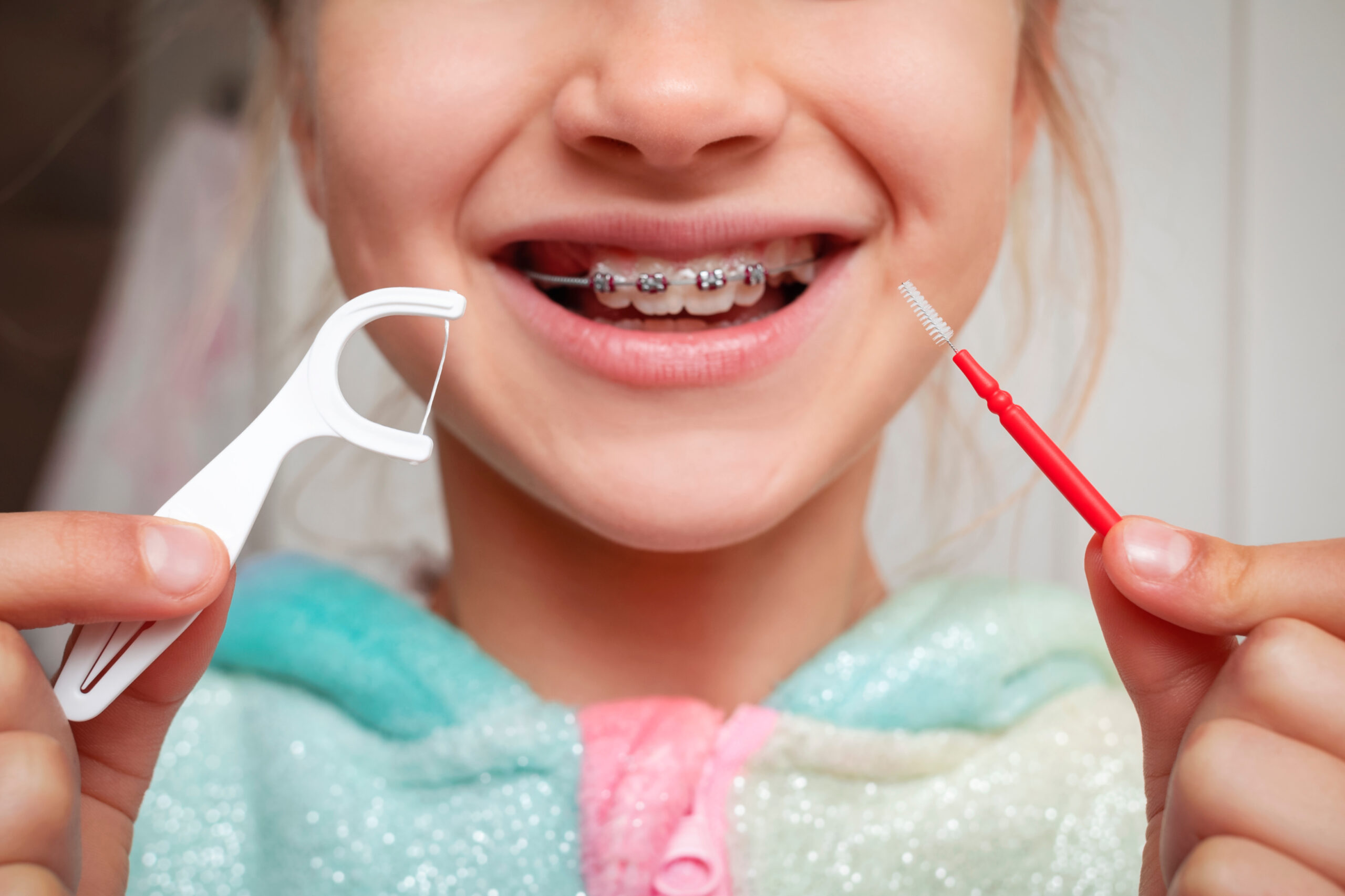
Brace Cleaning Teeth for Kids. Child Clean Teeth with Braces. Dental Braces Care in Children, Flossing and Brushing.